The AI Assistant Built Into Your Service Desk
Suptask AI resolves and takes actions from your own knowledge - automatically, inside Slack, and always under your control

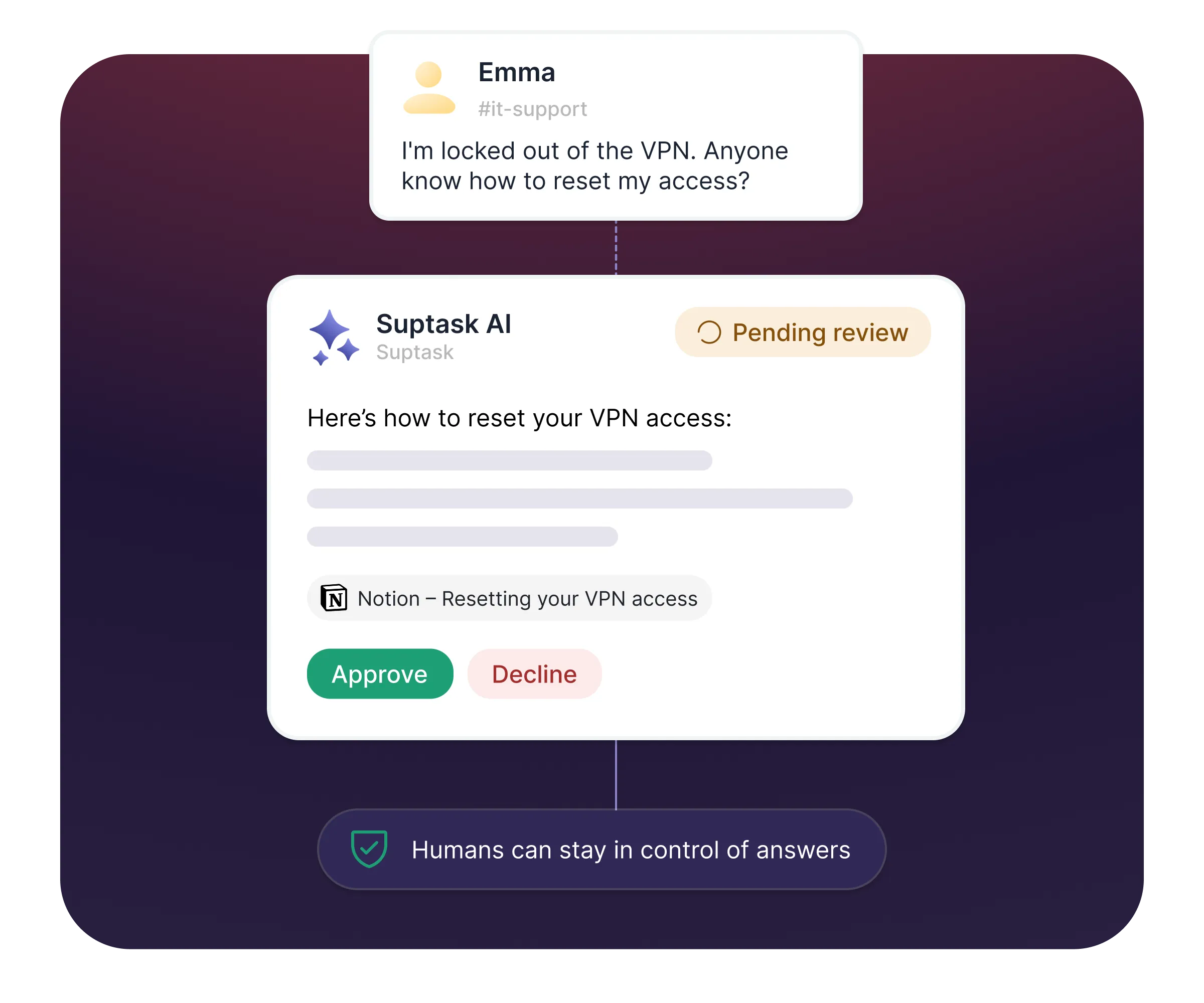










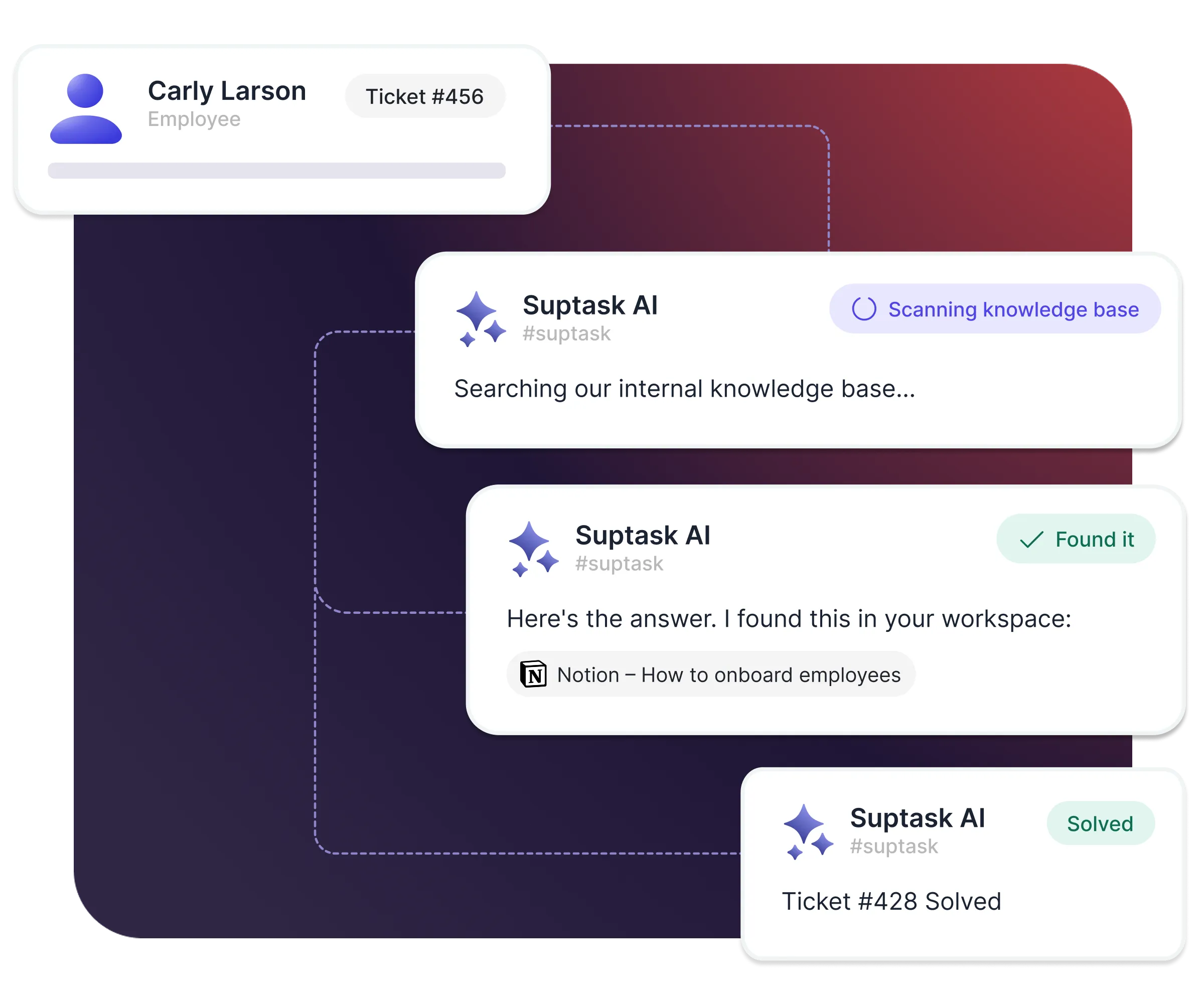
Resolve tickets automatically
- Answer requesters automatically from your knowledge
- Handle full conversations, including follow-up questions
- Escalate to an agent when AI can't solve it
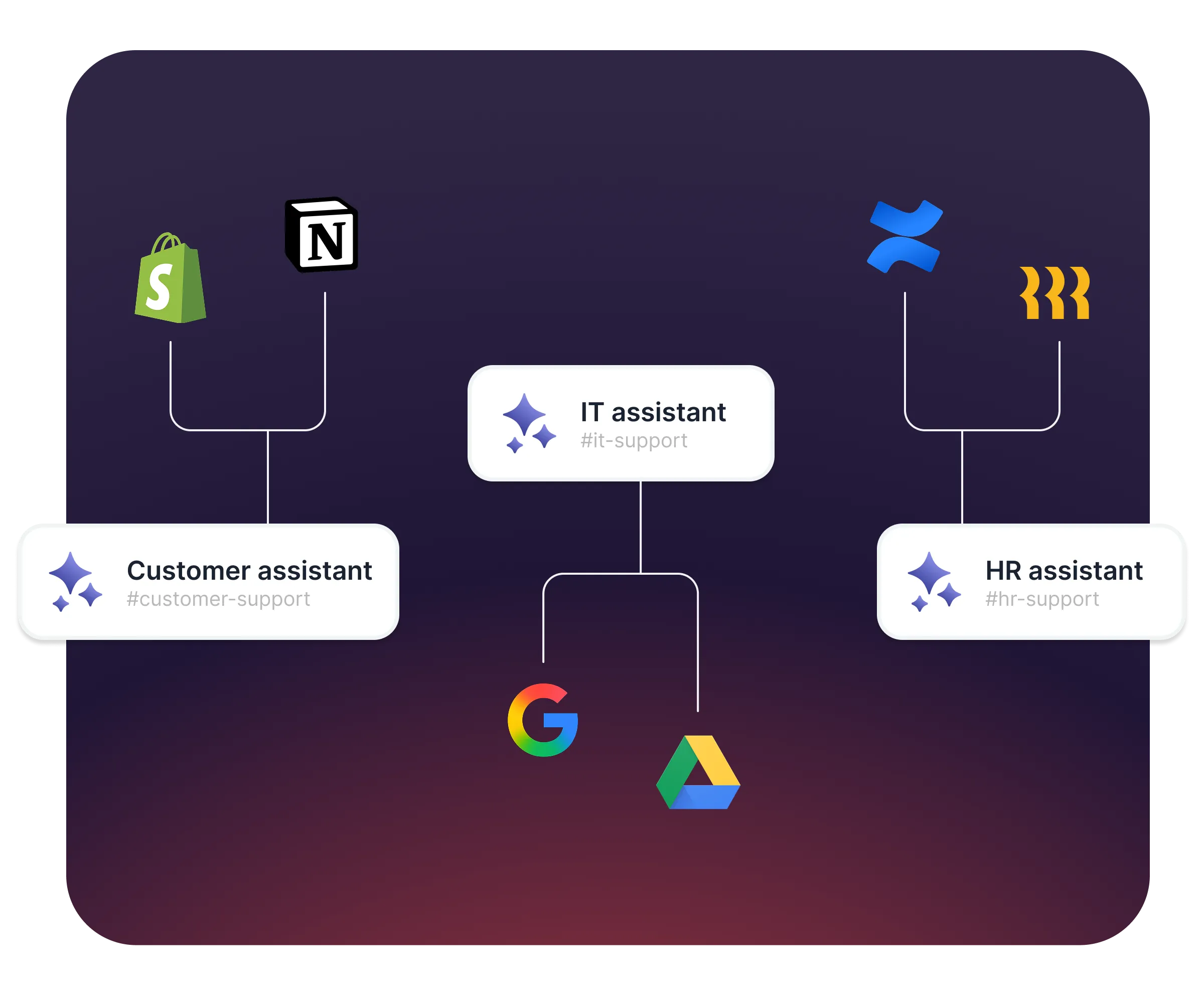
An AI assistant for every team
- Give each team its own AI assistants
- Connect to your knowledge base or upload documents
- Trigger automatically or manually
Let AI do the work, not just answer
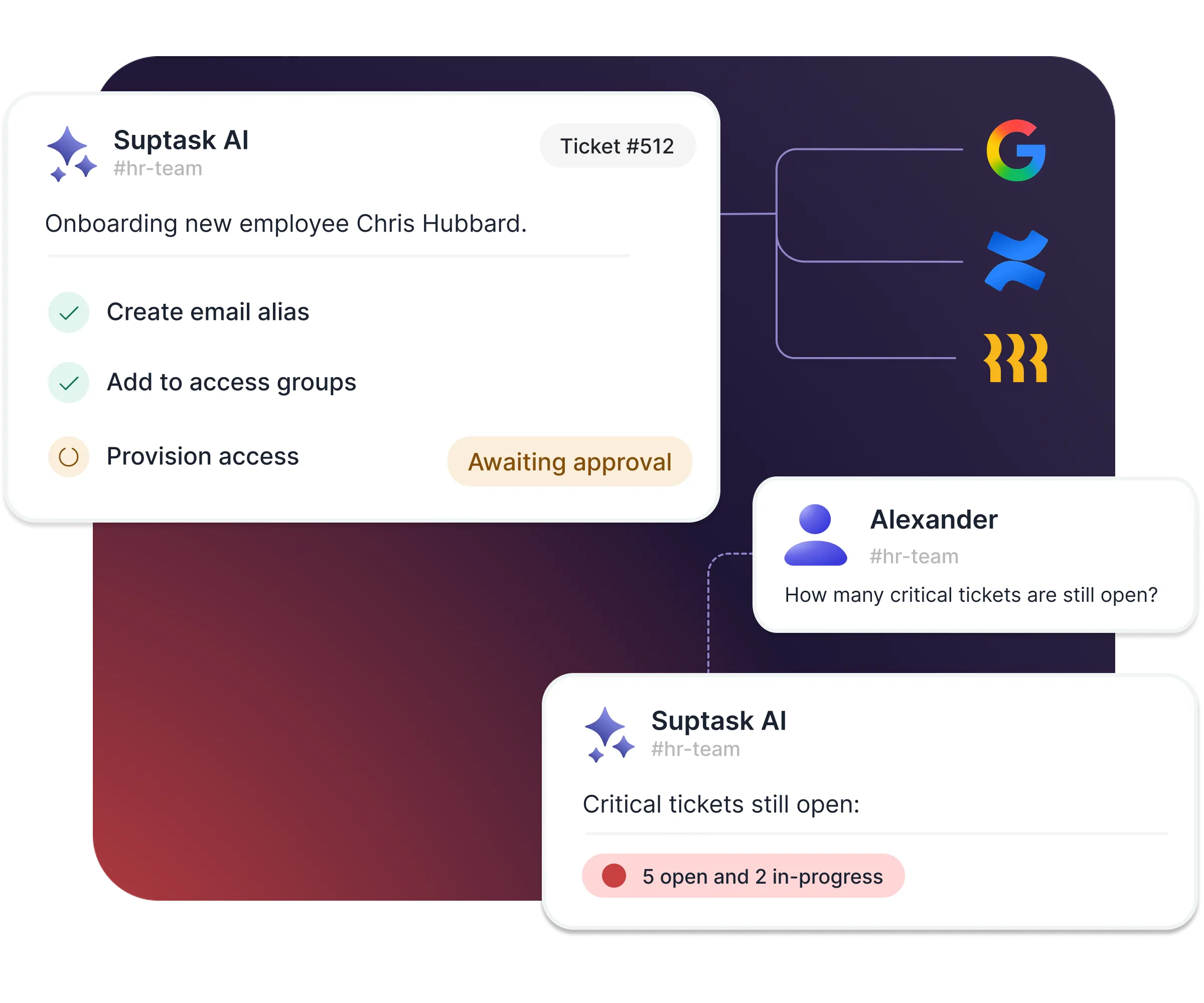
- Automate recurring tasks like onboarding and access requests
- Enrich and perform actions with systems such as HRIS, MDM and User Directories
- Get insights and stats about your tickets on demand
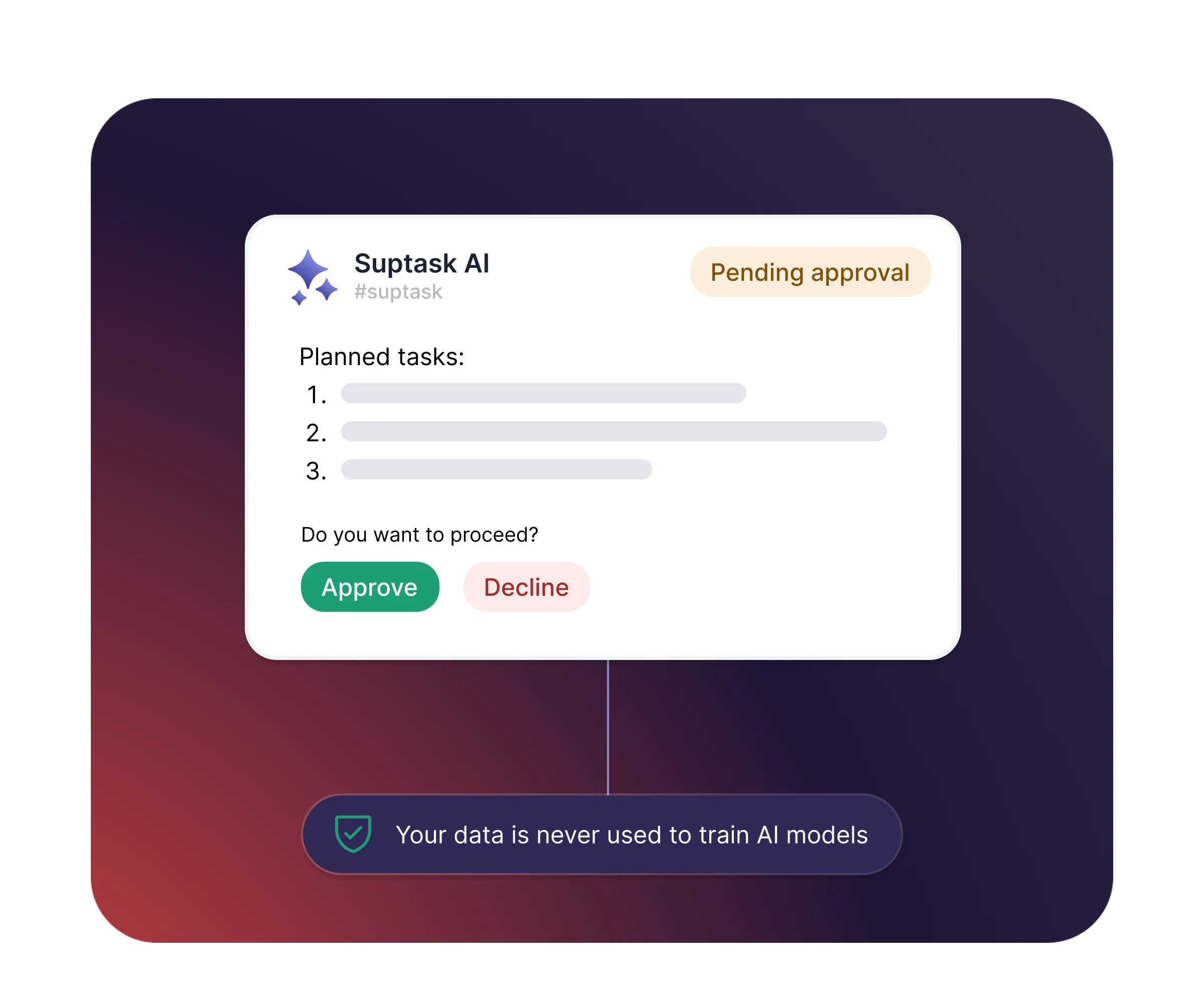
Powerful automation, with a human in the loop
- Choose what runs automatically and what needs approval
- Review AI answers before requesters see them
- Your data is never used to train AI models
How it works
[1] Capture
[2] Build
[3] Resolve
What your team gets with Suptask AI

Instant answers, day or night
Requesters get accurate answers from your knowledge base automatically, without waiting for a free agent.

Less busywork for agents
Suggested replies, summaries, and insights are handled by AI, so agents spend time on the work that needs them.

Knowledge that builds itself
Every closed ticket gets an AI summary of the problem and solution - searchable in Slack and building team knowledge over time.

Always in your control
Nothing leaves Slack without your rules. Approvals, automation, and privacy are set by you, not the AI.
What teams improve with Suptask
Built for different teams
For IT teams

For HR teams

For Finance teams

Already trusted by fast-moving support teams.




Put AI to work on your tickets today
Frequently asked Questions
How does the Suptask AI assistant work?
You build assistants from prompts and workflow tasks, connect them to your knowledge and systems, and set their triggers. They can suggest answers to agents, reply to requesters directly, or run workflow tasks - within the limits you define.
No. Suptask AI does not use your data to train any models. AI features are opt-in and can be turned off per inbox or for your whole account. You can read more in our AI Policy.
Yes. You can let assistants reply to requesters directly from your knowledge base, or keep them in suggest-only mode where an agent reviews before anything is sent.
Yes. Connect HRIS (such as Hibob) and user directories (such as Google Workspace) to enrich tickets, and configure workflow tasks for onboarding, access requests, and other recurring work.
It escalates to a human agent. You stay in control of which actions are automatic, which need approval, and which aren't allowed.
A classic chatbot has to be told what to do. Someone maps out the intents, the decision tree, and every branch in advance - and the moment an employee asks something slightly outside the script, it breaks. Every new use case means going back and building another flow.
Suptask AI doesn't run on predefined flows. You give it access to your knowledge sources and connectors, and it decides for itself what a request needs: pull the answer from your documentation, look up the employee's record in your HR system, check an issue in Jira, or open a ticket and route it to the right team. The reasoning happens per request, based on the tools available - not on a workflow you had to define first.