Internal Operations Built Into Slack
Make every team run more efficiently, with one system for requests across the business.

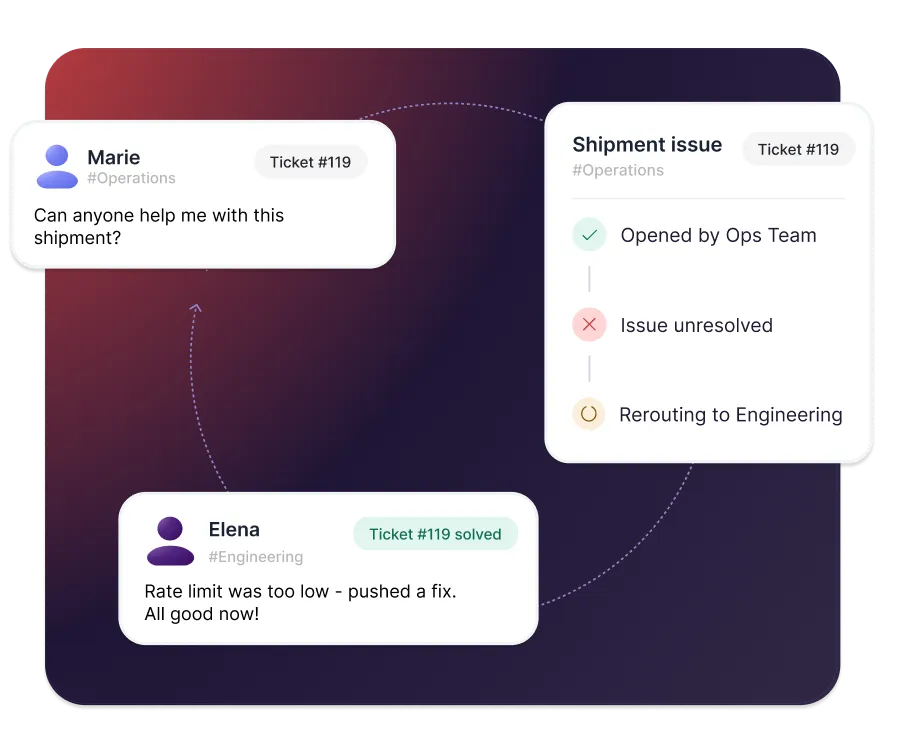








Structured internal operations, built directly into Slack

One way to ask
Employees send every request in Slack, whatever team it's for - no portal, no guessing where to go.

One system for every team
Sales, Engineering and Ops each get their own inbox, running on the same platform.

Visibility across the business
See volumes, ownership, and response times across every team from one place.
One way to take in requests, for every team
- Capture requests from any Slack message or DM
- Establish intake of requests in dedicated Slack channels
- Route each request to the right team automatically


Hand off work across teams without losing it
- Give each team its own inbox on one platform
- Escalate and hand off requests between teams in Slack
- Keep full context on the ticket through every handoff
Automate the work that repeats
- Answer recurring questions automatically with AI
- Run repeating processes like onboarding and access requests
- Automate approvals across teams and budget owners
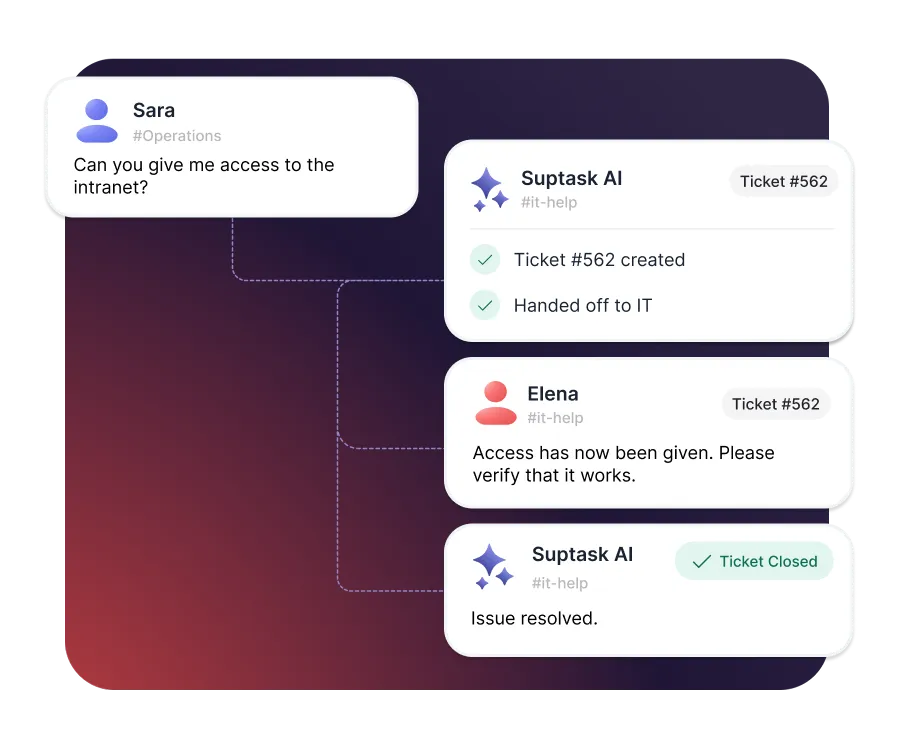

Reporting and SLA visibility
- Utilize SLAs so requests never stall between teams
- Compare volumes, workload, and response times by team
- Spot recurring requests worth automating


Built for different teams
For IT teams


For Finance teams

Transforme o Slack em um suporte técnico que sua equipe fará realmente use
Frequently asked Questions
O que é um sistema de emissão de tíquetes do Slack?
A Slack ticketing system is help desk and service desk software that integrates with Slack. Any department, from IT and HR to finance, can submit, track, and resolve internal requests without ever leaving their main workspace. Using Slack as your help desk, your messages can turn into tickets, so you never have to leave Slack to manage your tickets.
Sim, o Slack pode ser usado como um sistema de emissão de tíquetes integrando aplicativos dedicados, como o Suptask, ao Slack. Isso permite que as equipes criem, rastreie e gerencie solicitações tudo em um só lugar.
Suptask is built as a solution that works for any team.
We have proven examples across many organizations where teams such as IT (ITSM), Product, Engineering, Finance / Billing, Revenue Operations, Sales Operations, and HR are using Suptask to improve their ticketing experience on Slack.
To use Slack as a help desk using Suptask, Sign up and install Suptask, then simply ask for help in a designated channel (e.g., #support) or add a ticket emoji to any message.
Você pode controlar os tickets sem sair do Slack. A configuração não requer conhecimento de codificação. Aqui está o procedimento.
- Se alguma mensagem nova for tratada automaticamente como ticket nos canais do Slack, automatize a criação de tickets. Os usuários podem transformar mensagens anteriores do Slack em tickets usando um emoji específico (por exemplo, "🎫 “).
- Automatize a atribuição de tíquetes usando regras. Os ingressos devem ser atribuídos às pessoas ou grupos apropriados. O Suptask oferece atribuição direta, a regra do menor número de tickets abertos e roteamento baseado em palavras-chave.
- Automatize atualizações/notificações notificando automaticamente os solicitantes sobre seus tickets, novas tarefas para agentes e respondendo em tópicos para que haja total transparência sobre mudanças de status e processos de resolução, etc.
Você pode criar tickets do Slack a partir de qualquer conversa com vários métodos:
- Publique em um canal de solicitação: Envie uma nota para um canal chamado #it -support. O Suptask o transformará em um tíquete.
- Use uma reação de emoji: Reaja com um emoji de tíquete (como 🎫). O Suptask transformará essa mensagem em um ticket.
- Use um comando Slash: Escreva /suptask ou /helpdesk para criar um ticket em qualquer lugar no Slack.
- Atalho de mensagem: Em qualquer mensagem, selecione a abreviatura “Criar um ticket” do Suptask para transformá-la em um ticket.